
Guide
Registering a balcony power plant in 2026: step by step
Since Germany's Solar Package I, registering a balcony power plant has become much simpler. Find out what applies in 2026, which details you need and what to check before plugging in.
Updated 7 min readEditorial team wosolar.de
What applies to balcony power plants in 2026
A balcony power plant (Balkonkraftwerk) – officially a plug-in solar device (Steckersolargerät) – is a small photovoltaic system connected to the home circuit via a plug. Two limits apply under the simplified rules: the inverter or feed-in output may be no more than 800 watts, and the installed panel output no more than 2,000 Wp. Within these limits, there's no need to notify the grid operator; registering in the Federal Network Agency's Market Master Data Register (Marktstammdatenregister, MaStR) is enough.
These rules come from Solar Package I, which came into force in 2024. Since December 2025, there has also been a dedicated product standard for plug-in solar devices, DIN VDE V 0126-95. Among other things, it describes when a standard Schuko plug is sufficient and when a dedicated energy plug-in connector is specified. Systems already in operation have grandfathered status.
- Feed-in output: max. 800 watts (inverter)
- Panel output: max. 2,000 Wp
- Registration: Market Master Data Register only, no separate grid operator notification
- Deadline: usually within one month of commissioning
Popular 800 W balcony power plants
Ad All products linked with "View offer" are commission (affiliate) links: if you buy through them, we earn a commission – the price stays the same for you. As an Amazon Associate and eBay Partner Network affiliate we earn from qualifying purchases. Learn more
 Ad
AdBalkonkraftwerk 800W Premium-Komplettset mit 960 Wp Back-Contact Modulen
 Ad
AdLIONSHEE 960W Balkonkraftwerk, Wechselrichter 800w …
 Ad
AdBalkonkraftwerk 960W /800W Komplettset für Balkonkraftwerk Heim Garten …
 Ad
Ad960W/800W Balkonkraftwerk Komplettset für Balkonkraftwerk Heim Garten …
Before you buy: plug, socket, landlord
Before you deal with registration, clarify three practical questions. First, the connection: according to the product standard, a Schuko connection is intended for plug-in solar devices up to 960 Wp of panel output without a battery. Above that – for example with 2,000 Wp kits – a dedicated energy plug-in connector such as the Wieland plug is specified; the matching feed-in socket is installed by a qualified electrician. In every case, the balcony power plant should be plugged directly into a permanently installed socket, not a multi-socket adapter or cable reel.
Second, the condition of the electrical installation: in older buildings, it's worth having a qualified electrician quickly check that the circuit is in good order and adequately fused. Third, consent: since October 2024, plug-in solar devices have been a privileged measure under German tenancy and condominium law. You still need consent from your landlord or owners' association, but you're generally entitled to it. They can have a say in how it's installed – for example fixing and appearance. Get consent in writing and describe the mounting location and mount.
Step 1: Gather your details
You only need a few details for registration. Have them ready and, in our experience, entering them only takes a few minutes:
- Date of commissioning (the day you first plugged the device in)
- Location of the system (address; for blocks of flats, the building address is enough)
- Gross panel output in Wp (total of all panels)
- Net rated output of the inverter in watts or VA (max. 800)
- With a battery: usable capacity in kWh and battery output
- Optional: your electricity meter number
Step 2: Register in the Market Master Data Register
Registration is online and free of charge on the Market Master Data Register website. First, you create a user account and register as a system operator, i.e. as a private individual. You then choose to register an electricity generation unit and select the simplified option for plug-in solar devices. The form then asks for the details gathered above.
Registration is mandatory. The grid operator is informed via the register; a separate form for them is no longer required. Save the registration confirmation or your MaStR number – it's useful if questions arise later or you need to change your details.
Step 3: Register the battery separately
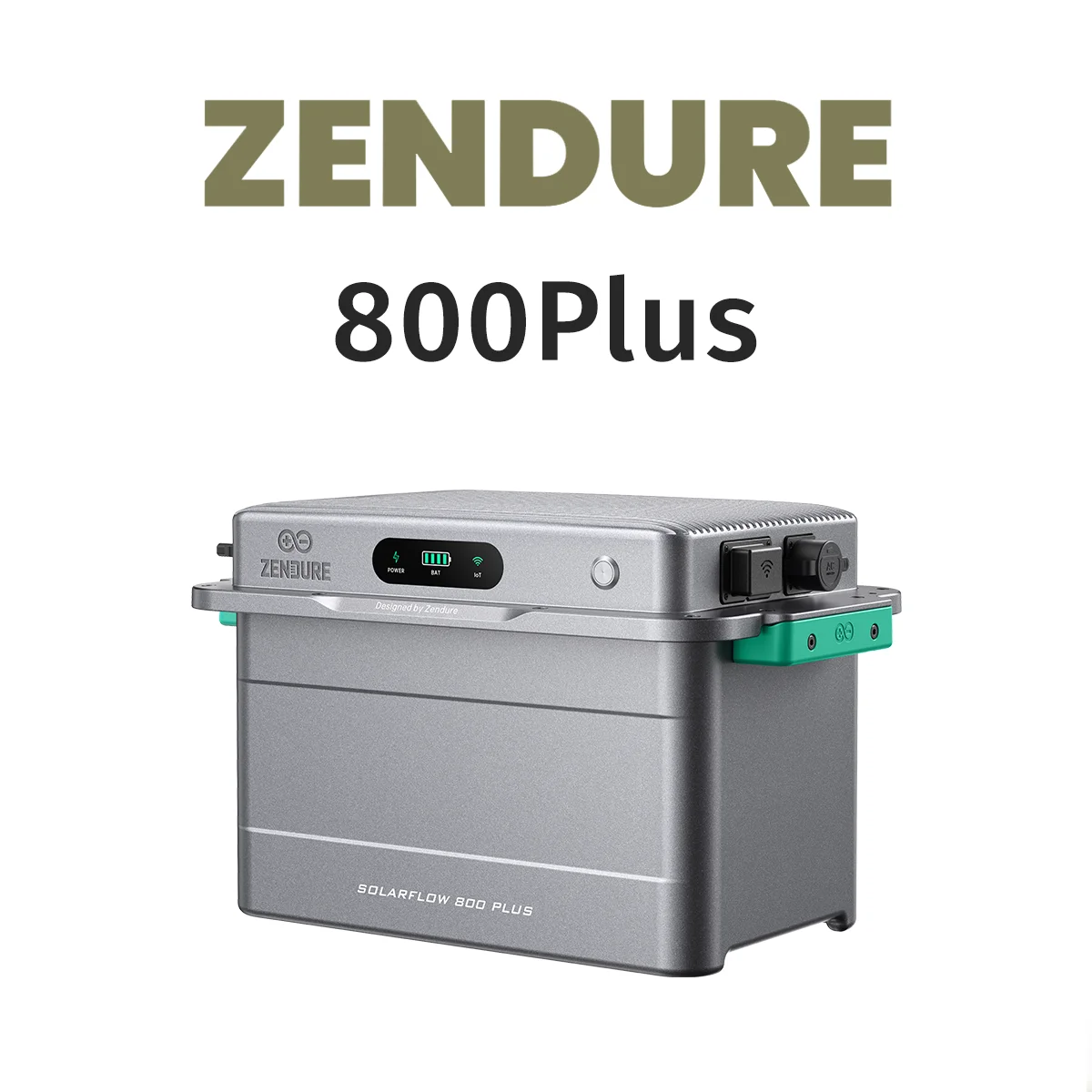
If you run your balcony power plant with a battery, you enter the battery in the Market Master Data Register as a separate unit. This also applies if you add one later – you then update your registration. Note: the 800-watt feed-in limit applies regardless of the battery. The product standard for plug-in solar devices does not fully cover batteries; follow the manufacturer's certificates and installation requirements.
Balcony power plants with battery
Ad All products linked with "View offer" are commission (affiliate) links: if you buy through them, we earn a commission – the price stays the same for you. As an Amazon Associate and eBay Partner Network affiliate we earn from qualifying purchases. Learn more
 Ad
AdMarstek Venus D Balkonkraftwerk mit 0 kWh Speicher & Wechselrichter: 0% …
 Ad
AdZendure SolarFlow 800 Plus All-in-One Speicher 1,92kWh für Balkonkraftwerk
 Ad
AdCONOW CBE2000 Pro Balkonkraftwerk Speicher 2-7kWh 2500W Wechselrichter 4 …
 Ad
AdMARSTEK Venus E Mini Balkonkraftwerk Speicher 2kWh Plug&Play 1.5kW AI-EMS …
Step 4: The meter – what happens after registration?
Many households already have a digital meter (modern metering device) with a backstop. In that case, nothing changes for you. If you still have an old Ferraris meter with a rotating disc and no backstop, it may keep running for the time being, even if it turns backwards when feeding in. The metering point operator will then replace it, free of charge for you. You don't have to wait for the new meter before plugging in.
With plug-in solar devices, you usually receive no payment for surplus power fed into the grid – it's normally supplied to the grid free of charge. The financial benefit therefore comes from the electricity you use yourself.
Tax: 0% VAT and no income tax
Since 2023, a VAT rate of 0 per cent has applied in Germany to the supply and installation of solar panels, inverters and batteries for systems up to 30 kWp on or near residential buildings (Section 12(3) UStG). Balcony power plants are covered, which is why many shops show “0% VAT”. Income from small photovoltaic systems is also generally exempt from income tax. You don't need to register a business for a balcony power plant.
Avoiding common mistakes
Most problems don't arise during registration, but during set-up:
- Connecting via a multi-socket adapter or extension cable reel – always plug directly into a fixed socket.
- Inverter above 800 watts without limitation – check the setting in the datasheet or app.
- Forgetting to register or not entering the battery – this can be done at any time and should be done promptly.
- Inadequate fixing – panels must be mounted to withstand storms, especially on higher floors.
- Not recording changes – update your details in the register when adding panels or replacing the inverter.
Changes, moving house and deregistration
The Market Master Data Register is meant to reflect the current state of your system. If you expand your balcony power plant with more panels, replace the inverter or add a battery, update the details in your account. If you move house and take the balcony power plant with you, deregister the unit at the old location or create a new entry at the new one – depending on the options the register offers. If you sell or dispose of the system, record its permanent decommissioning.
If you already run a larger photovoltaic system on your house, check before buying whether an additional balcony power plant makes sense. The simplified rules are intended for individual plug-in solar devices; with several generating systems on the same connection, you may need to consult the grid operator. If in doubt, ask them before plugging in a second system.
Checklist to tick off
This list helps you keep track from purchase to operation:
- Consent obtained from landlord or owners' association
- Mounting location measured, mount chosen to suit railing and panels
- Plug suited to panel output (Schuko up to 960 Wp without battery, otherwise energy plug-in connector)
- Inverter certified to VDE-AR-N 4105 and limited to 800 watts
- Commissioning date noted, registration in the Market Master Data Register completed
- Battery entered as a separate unit, if applicable
- Fixings checked after the first storm
Insurance and liability
Tell your home contents and personal liability insurers about the balcony power plant. Many policies now include plug-in solar devices; some require notification or have restrictions, for example for storm damage to externally mounted parts. If a panel falls in a storm and damages a car or injures someone, your personal liability insurance usually comes into play – so a quick call or a look at the terms is worthwhile before you start using the system.
Keep the invoice, datasheets, the inverter's certificates of conformity and the confirmation from the Market Master Data Register together. That way, you'll have everything to hand in the event of damage or queries from your landlord, grid operator or insurer. These documents are also helpful if you later sell the system.
Suitable mounts
Ad All products linked with "View offer" are commission (affiliate) links: if you buy through them, we earn a commission – the price stays the same for you. As an Amazon Associate and eBay Partner Network affiliate we earn from qualifying purchases. Learn more
 Ad−8%
Ad−8%Solakon® 1000W Balkonkraftwerk komplett Steckdose, Ohne Halterung, 3m Kabel
 Ad
AdSolakon® 1000W Balkonkraftwerk komplett Steckdose, Ohne Halterung, 5m Kabel
 Ad
AdBalkonkraftwerk 1840W, WIFI, drosselbar …
 Ad
AdWohnmobil Set 100W 200W 300W 400W Solarmodul Solarpanel Mit Montage PV …
FAQ
Do I have to register my balcony power plant with the grid operator?
No. Since Solar Package I, registering in the Market Master Data Register is enough. The grid operator receives the information from there.
How long do I have to register?
Registration should usually be completed within one month of commissioning. If you've missed it, catch up as soon as possible.
Does registration cost anything?
No, registering in the Market Master Data Register is free. Replacing the meter by the metering point operator is also free of charge for you.
Can I feed in with an old Ferraris meter?
Yes, for the time being. A meter without a backstop may keep running until the metering point operator replaces it.
Do I need my landlord's permission?
Yes, but since October 2024 you've generally been entitled to consent. The landlord can have a say in how it's mounted.