
Foldable solar panels for power stations & camping
1 Solar systems from established makers · Selection index 100.0 ±0.0% 7 d · avg €57 · as of 18/10/2026
Price table · 1 Solar systems
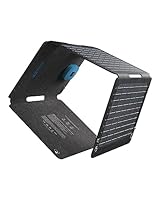
Portable solar blankets charge power stations, phones and camping batteries wherever there's no socket. Compare foldable panels from small to 400 watts here.
How much power you need
Small panels with 20 to 60 watts and USB outputs are enough to top up a smartphone, power bank or head torch during the day. For power stations, 100 to 400 watts are common. As a rough calculation: a 200 W panel might deliver 120 to 160 watts under good conditions, so roughly 0.6 to 1 kWh over a full summer's day – enough to noticeably recharge a mid-sized power station, but not to fill it in a few hours.
Portable panels only reach their rated output when perfectly aligned. Set them up as close to perpendicular to the sun as possible and re-angle them throughout the day – that often achieves more than a bigger panel lying flat on the grass.
Connecting to a power station
Before you buy, check that the panel and power station match:
- Connector: many power stations use XT60, Anderson or proprietary sockets; panels often have MC4 plus adapters.
- Voltage: the panel's open-circuit voltage (or that of several panels in series) must be within the power station's permitted input range.
- Power: panel watts beyond what the solar input can handle won't be used.
- Parallel or series: two panels can be combined depending on the input – follow the manufacturer's instructions.
Robustness on the go
Look for the IP rating (e.g. IP65 or IP67), an ETFE surface and sturdy kickstands. The junction box is usually less protected than the cells – don't leave it exposed in the rain. When folded, the panels should be stored dry. A built-in USB output is handy, but only works reliably in sufficient sunshine.
Weight and packed size
A 100 W panel usually weighs just a few kilograms and fits in the boot when folded; 400 W panels are considerably larger and heavier. Think about how often you'll have to carry the panel. Small models with a USB output suit hiking and cycling trips, while larger panels for a power station suit camping by car or motorhome. A carry handle and a pouch for cables are more useful day to day than they sound. Also compare cable lengths: if the panel stands in the sun and the power station in the shade, a few metres of distance help.