
Micro-inverters compared
2 Solar systems from established makers · Selection index 100.0 ±0.0% 7 d · avg €124 · as of 18/10/2026
Price table · 2 Solar systems
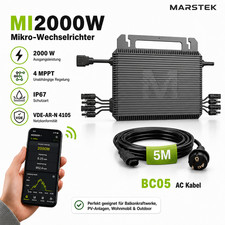

The inverter converts the panels' direct current into grid-compatible alternating current. Here you'll find individual micro-inverters for retrofitting or DIY builds.
What a micro-inverter does
A micro-inverter sits right next to the panels, uses MPP tracking to find the best operating point at any given moment and feeds in synchronised with the grid. It also monitors the grid and shuts down in the event of a power cut, so no voltage reaches a disconnected grid. In Germany, a certificate of conformity to VDE-AR-N 4105 is standard for this.
For balcony power plants, the output is limited to 800 watts. Devices with a higher rated output, such as 2,000 watts, must be throttled accordingly for use as a plug-in solar device – check whether this is set at the factory or done via the app.
Buying criteria
These are the main points to compare:
- Number of MPPT inputs: two for two panels, four for systems up to 2,000 Wp or different orientations.
- Input voltage and current: must match the panel data, especially with modern high-current panels.
- Monitoring: Wi-Fi, Bluetooth or a dedicated gateway – and whether the app can be used without a mandatory cloud connection.
- Certificates: conformity with VDE-AR-N 4105, CE marking, IP rating for outdoor installation (e.g. IP67).
- Battery compatibility: some devices can be paired with battery storage, others can't.
Retrofitting and replacing
If you previously had a 600 W inverter, you've been allowed to upgrade to 800 watts since Solar Package I. On some models this is done via firmware, otherwise by replacing the device. Record any changes to the system in the Market Master Data Register. Only work on the inverter when it's de-energised: first disconnect it from the grid, then unplug the panel connections.
Monitoring and data privacy
Most micro-inverters send their data to an app via the manufacturer's cloud. That's convenient, but it means your generation data passes through third-party servers. Some devices can be read locally via Bluetooth or are supported by smart home systems. If that matters to you, check before buying whether a local interface is available. Alternatively, a smart metering plug measures feed-in independently of the inverter. Also check whether the manufacturer provides firmware updates and how long the warranty runs – longer warranty periods are common for micro-inverters.