
Guide
Is a balcony power plant worth it? Yield, self-consumption and the maths
Whether a balcony power plant pays off depends on three factors: how much electricity the panels generate, how much of it you use yourself, and what a kilowatt-hour from the grid costs you. Here we work it out with clearly labelled assumptions.
Updated 7 min readEditorial team wosolar.de
How much electricity does a balcony power plant generate?
As a rule of thumb, a well-oriented photovoltaic system in Germany generates around 800 to 1,000 kWh per kWp of installed panel output per year. Values tend towards the upper end in the south and the lower end in the north. This rule of thumb applies to a south-facing orientation with a tilt of around 30 to 35 degrees and no shading – in other words, ideal roof conditions.
On a balcony, things often look different. Panels mounted vertically on a railing deliver noticeably less over the year – depending on location, often roughly a quarter to a third less. East- or west-facing balconies also lose a little compared with south, but spread the yield better across the day. Shading from neighbouring buildings, trees or the balcony above can reduce yield considerably.
- South-facing balcony, panels slightly tilted: close to the rule of thumb
- South-facing balcony, vertical on the railing: well below
- East- or west-facing balcony: slightly below, but a more even daily curve
- Partial shading: can reduce yield considerably – micro-inverters with separate inputs help
Self-consumption: the decisive factor
You only save money with the electricity you use at the moment it's generated. With balcony power plants, surpluses usually flow into the grid without payment. How high your self-consumption share is depends on your base load – fridge, freezer, router, heating pump and standby devices run constantly and absorb some of the solar power during the day.
If you're at home during the day, run the dishwasher and washing machine at midday or work from home, you'll reach much higher shares than a household that's empty during the day. A metering plug or smart meter shows you how high your base load really is.
Example calculation with assumptions
The following calculation is an example, not a promise. All values are assumptions that you should replace with your own figures:
- Assumed system: 2 panels of 450 Wp each = 0.9 kWp, south-facing balcony, slightly tilted
- Assumed yield: 800 kWh per kWp per year → around 720 kWh per year
- Assumed self-consumption: 50% → around 360 kWh used yourself
- Assumed electricity price: 35 cents per kWh
- Savings per year (euros): approx. 126
- With a purchase price in the mid three-figure range, the payback period is roughly three to six years
800 W kits to compare
Ad All products linked with "View offer" are commission (affiliate) links: if you buy through them, we earn a commission – the price stays the same for you. As an Amazon Associate and eBay Partner Network affiliate we earn from qualifying purchases. Learn more
 Ad
AdBalkonkraftwerk 800W Premium-Komplettset mit 960 Wp Back-Contact Modulen
 Ad
AdLIONSHEE 960W Balkonkraftwerk, Wechselrichter 800w …
 Ad
AdBalkonkraftwerk 960W /800W Komplettset für Balkonkraftwerk Heim Garten …
 Ad
Ad960W/800W Balkonkraftwerk Komplettset für Balkonkraftwerk Heim Garten …
How the calculation shifts
Vertical mounting without tilt, a north-west-facing balcony or low self-consumption extend the payback period considerably. Conversely, inexpensive kits, high daytime consumption and rising electricity prices shorten it. Factor in the lifetime too: solar panels often have performance warranties of 20 to 30 years, while inverters often last less long. A balcony power plant that has paid for itself after five years keeps on saving afterwards.
More panel output – up to the permitted 2,000 Wp – mainly increases yield in the morning and evening and on cloudy days. That raises self-consumption, because the 800 watts are available for more hours. At the same time, costs rise, and more power is clipped at midday.
And with a battery?
A battery makes midday surpluses usable in the evening, increasing self-consumption. However, it often costs more than the balcony power plant itself. Whether it pays off depends on how many kilowatt-hours the battery actually shifts per year. As a rough guide: a battery that shifts 1.5 kWh on each of 250 days a year delivers around 375 kWh of additional self-consumption – at 35 cents per kWh (assumption), that's approx. 131 per year (euros). Divide the battery's extra cost by this amount to see the payback period.
A battery makes most sense with plenty of panel output, a flat that's empty during the day and high evening consumption. With 800 Wp on a north-west-facing balcony, on the other hand, there's often hardly any surplus to store.
Balcony power plants with battery
Ad All products linked with "View offer" are commission (affiliate) links: if you buy through them, we earn a commission – the price stays the same for you. As an Amazon Associate and eBay Partner Network affiliate we earn from qualifying purchases. Learn more
 Ad
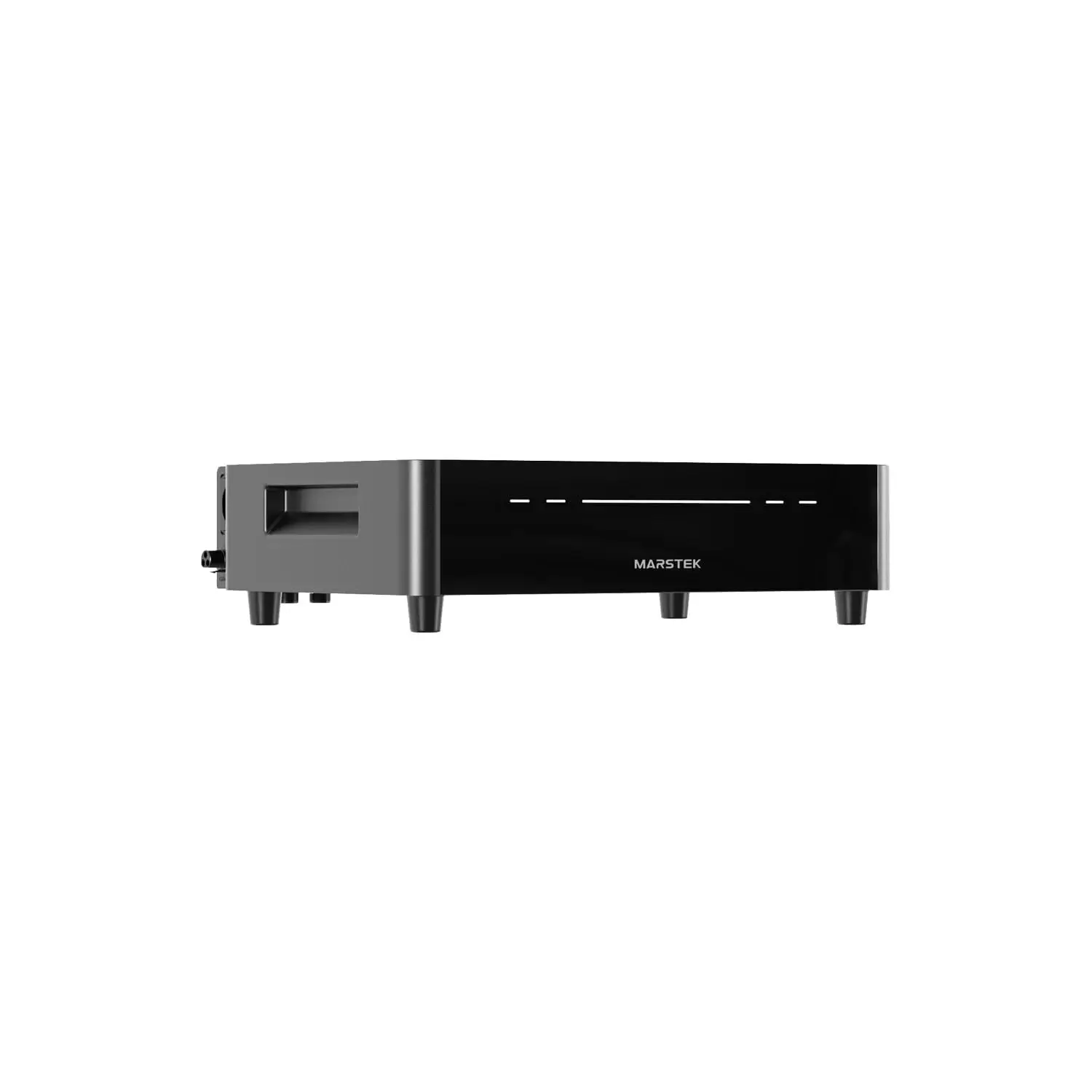
AdMarstek Venus D Balkonkraftwerk mit 0 kWh Speicher & Wechselrichter: 0% …
 Ad
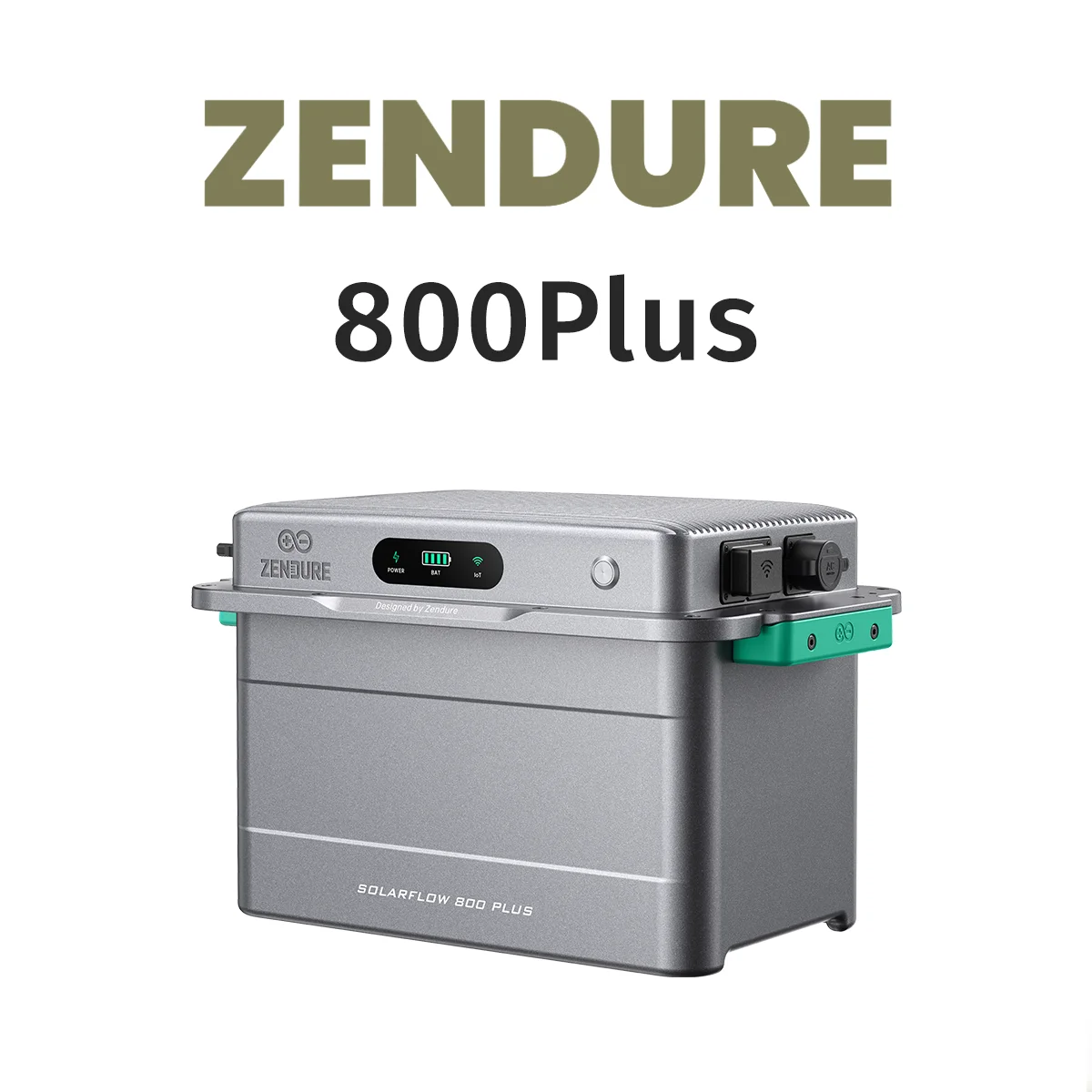
AdZendure SolarFlow 800 Plus All-in-One Speicher 1,92kWh für Balkonkraftwerk
 Ad
AdCONOW CBE2000 Pro Balkonkraftwerk Speicher 2-7kWh 2500W Wechselrichter 4 …
 Ad
AdMARSTEK Venus E Mini Balkonkraftwerk Speicher 2kWh Plug&Play 1.5kW AI-EMS …
Tips for more yield
A few adjustments help you get more out of your balcony power plant:
- Tilt the panels: even 20 to 30 degrees instead of vertical delivers noticeably more in the summer half of the year.
- Avoid shading: even small shadows on one cell can drag down the output of an entire panel.
- Use separate inputs: run panels with different orientations on separate MPPT inputs.
- Shift consumption: run the washing machine, dishwasher and battery charging around midday.
- Measure yield: with an app or metering plug, you'll spot problems such as dirt or defects early.
Estimating costs realistically
It's not just the kit price that counts. Factor in the mount, a feed-in socket installed by a qualified electrician if needed, longer cables and shipping costs. Large panels are often delivered by freight carrier, which can increase the price noticeably. Thanks to the zero VAT rate for photovoltaic components on residential buildings in Germany, no VAT is charged on the components themselves.
On the other hand, there are hardly any running costs: there's no maintenance as such – occasional cleaning and checking the fixings are enough. But expect to replace the inverter once during the panels' lifetime.
Yield over the year
Annual yield is distributed very unevenly. From April to September, a balcony power plant generates most of its electricity; in the winter months, often only a small fraction of that. This has two consequences: the largest surpluses arise in summer and flow into the grid without a battery, and in winter the system only covers part of the base load, even with low consumption. Vertically mounted panels balance this out somewhat, as they capture the low winter sun better.
When a balcony power plant is less likely to pay off
In some cases, payback is questionable:
- North-facing balcony or heavy shading for most of the day
- Very low electricity consumption and hardly any base load in the flat
- A foreseeable move with no way of taking the system with you
- High additional costs for mounting or electrical work relative to the yield
Your own calculation in three steps
First: estimate the yield. Take the panel output in kWp and multiply it by a value between 600 and 1,000 kWh – towards the lower or upper end depending on orientation, tilt and shading. Online calculators such as the European Commission's PVGIS provide more precise values for your location if you enter your panels' orientation and tilt.
Second: estimate self-consumption. Use a metering plug or your meter to measure the minimum amount of electricity your home needs during the day. If the base load is 150 to 200 watts, it absorbs a good share of the solar power; if it's well below that, more flows into the grid. Third: multiply the share you use yourself by the unit rate on your electricity bill and divide the purchase cost by the result. That gives you an honest payback period for your situation.
After a few months of operation, you can check the estimate against real figures: the inverter app shows generation, and a metering plug or meter reading shows your consumption. If you compare grid consumption with the same period the previous year, you'll see how much electricity the balcony power plant actually replaces – the picture becomes most meaningful after a full year, regardless of weather fluctuations.
FAQ
How much does a balcony power plant save per year?
That depends on yield, self-consumption and electricity price. With the example assumptions (0.9 kWp, 720 kWh yield, 50% self-consumption, 35 cents/kWh), the savings come to a low three-figure sum per year.
Is a balcony power plant worth it on a north-facing balcony?
Usually hardly. Without direct sun, the yield is low. East- and west-facing balconies, on the other hand, are often quite suitable.
After how many years does a balcony power plant pay for itself?
Under favourable conditions, often after three to six years; with an unfavourable orientation or low self-consumption, considerably later.
Do I get paid for electricity I feed into the grid?
Generally not. With plug-in solar devices, surplus power is normally supplied to the grid free of charge. The benefit comes from the electricity you use yourself.